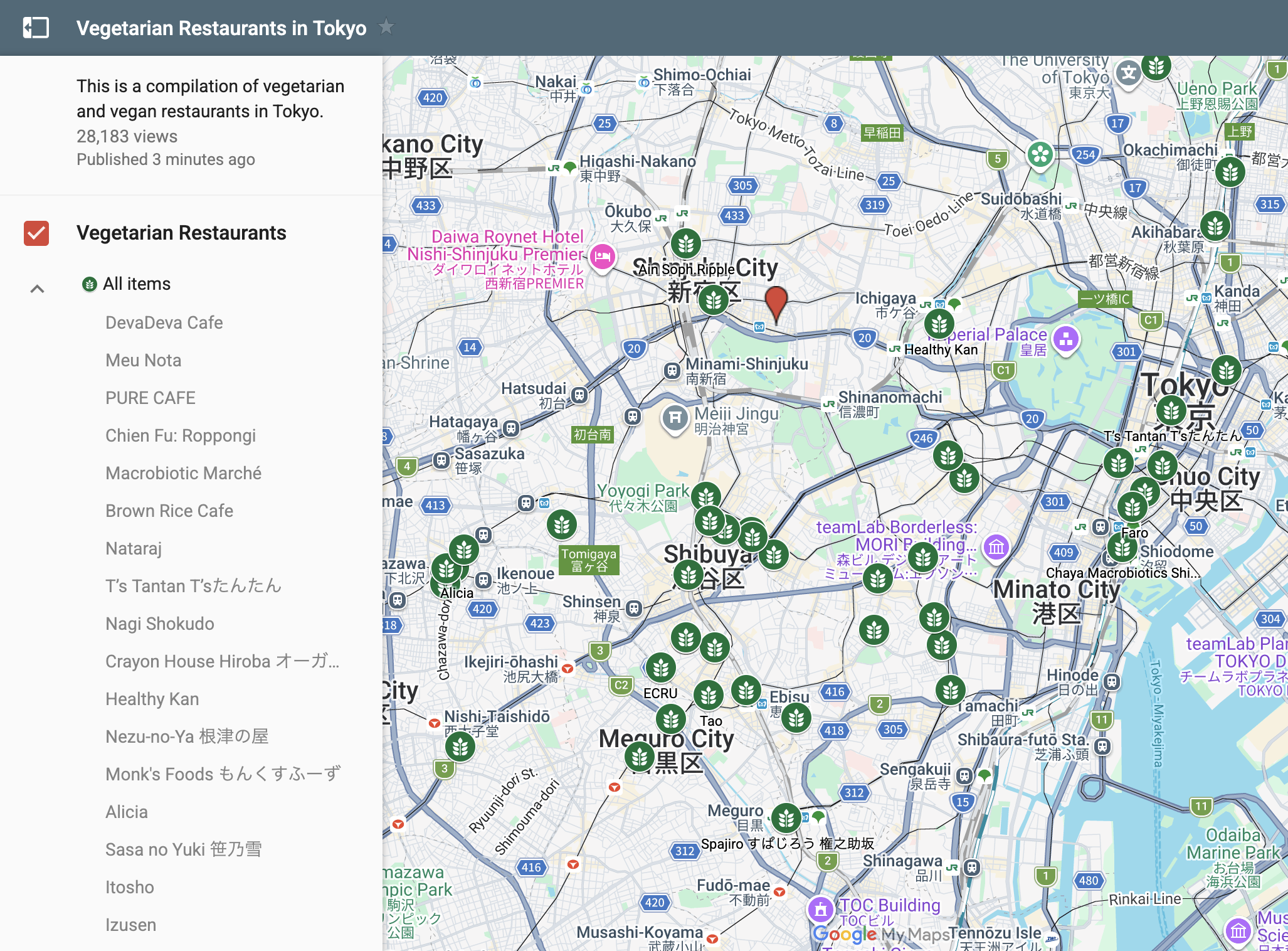
This post is an archived version of my original vegetarian and vegan guides to Tokyo created in February, 2016. Only the map below has some new restaurants added since.
You can view and save the Google Map onto your phone here: https://www.google.com/maps/d/embed?mid=1YII0rkidnm-FPeXwoTl-hmbv9Qk. I have added a few new restaurants and websites since 2020, but it’s not actively maintained.
This post provides a list of foods and tips for vegans and vegetarians navigating Tokyo. Please note that foods that may have been vegan on your last visit may now have animal products, especially convenience store foods. It’s best to check the back of the package for every separate trip to Japan. The information below helps you identify key words and find a short-list of potential options.
You can also check Vegewel’s English site for Tokyo’s vegetarian, vegan, and gluten-free restaurants.
Japanese Vegetarian Vocabulary
False Friends to Avoid
If you are shopping at the supermarket or ordering, avoid words with the fish character (魚), such as 鮪、鰹節、鯖、鯵. You can also have sushi that looks vegetarian that has minced meat or fish stock mixed in.
Other words to look out for are minced meat (おぼろ oboro), shrimp (海老 ebi), fish cakes (竹輪 chikuwa), soup stock (だし dashi), usually made of bonito flakes and kelp. Fish stock is usually in soup dishes, vegetables in broth, sauces,** soba and udon noodle soy sauce (だし醤油 dashi shoyu), and egg custard (茶碗蒸し chawan mushi), and even in many rice balls (おにぎり onigiri).
Useful Vocabulary in Restaurants:
- Vegetarian - 菜食 saishyoku
- Vegetarian - ベジタリアン bejitarian
- Vegan - 完全菜食主義の kanzen saishoku shugi no
- Vegan - ビーガン biigan
- Vegetables - 野菜 *yasai *
- Egg 卵 - tamago
- Without bonito (fish) flakes please* - katsuobushi nashi de onegai shimas.*
- Do you have [insert word]? - [insert word] *arimas ka? *
- This is yummy! - Oishiidesu!
Japanese Vegetarian Food
Rice balls (おにぎり onigiri)* Select ones
Most rice balls have meat, but there is usually at least one vegetarian option in a convenience store like Family Mart, Lawson, 7/11, Sunkus. Look out for these vegetarian options: 納豆/なっと natto onigiri - fermented soybean rice balls / rice tubes, 梅干しumeboshi onigiri - pickled plum rice balls, 昆布 konbu onigiri -kelp rice balls* (note, this may have fish stock depending on the sauce).
Green Soy Beans 枝豆 Edamame
In restaurants, edamame are good bets. They are boiled green soy beans sprinkled with salt, and highly nutritious in addition to being addictive!
Soy Milk
Just go to a convenience store (Family Mart, Lawson, 7/11) or supermarket and try. They options are very tasty!
Traditional Japanese Sweets
Many traditional Japanese desserts are vegetarian, and even vegan. Sweet rice cakes, mochi, fu, daifuku are usually round balls made with glutinous rice flower and fillings. Other favourites are a sweet bread roll with red bean anpan, folded cake with red-bean filling dorayaki, sweet steamed bun manjuū, monaka, Japanese fish-shaped cake taiyaki. The fillings are usually include red bean azuki, green tea macha, roasted soy bean kinako, sesame goma flavours.
Tempura (veggies) 野菜天ぷら yasai tempura
You can specifically ask for vegetable tempura in many restaurants.
Tofu 豆腐
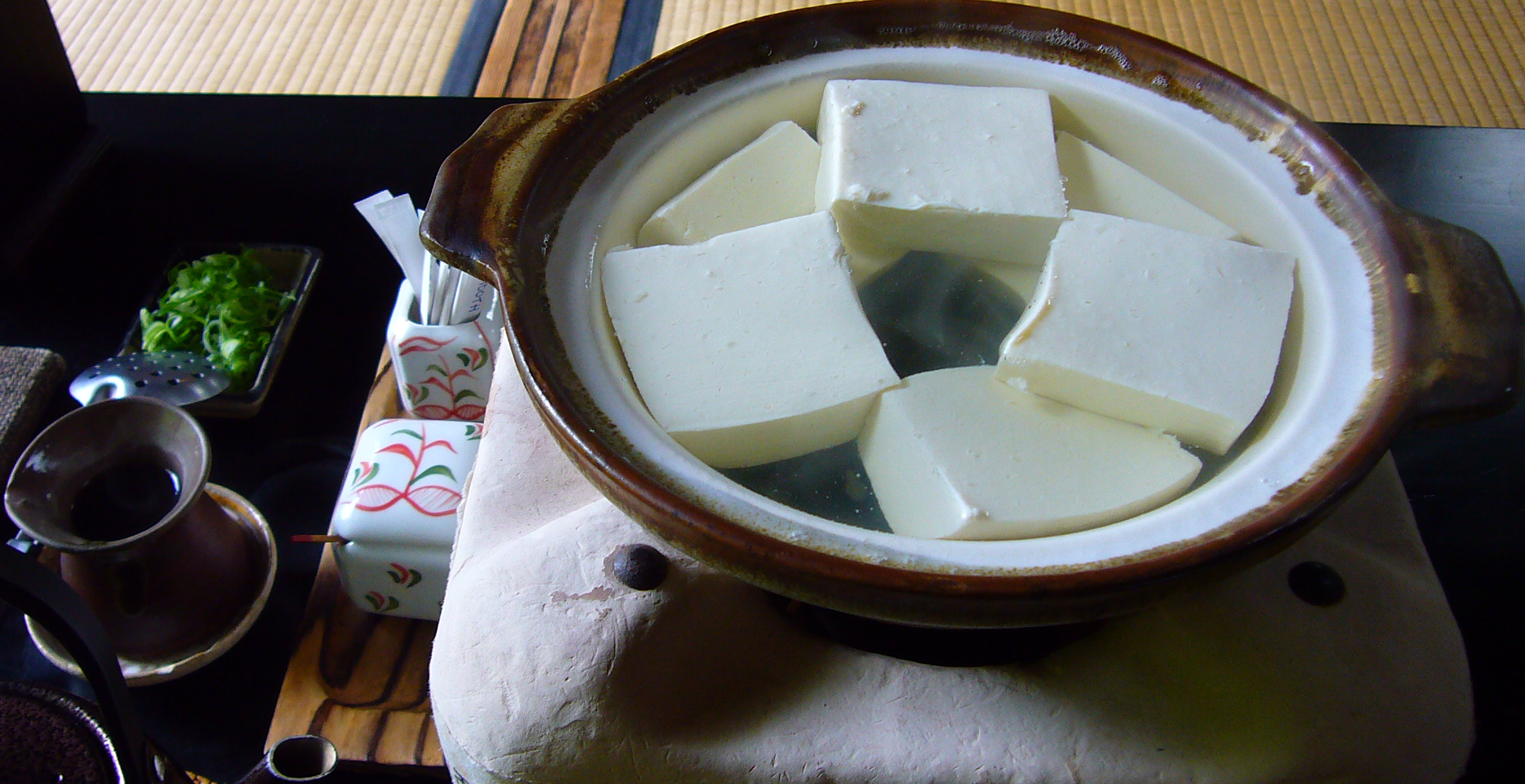 Tofu is a must try in Japan, no matter how much you dislike it in other parts of the world. It can be served boiled yudofu, fried agedofu, skewered, etc. It can come in a variety of flavours, such as sesame seed tofu gomadofu, and textures such as firm momendofu, silken kinedofu, and freeze-dried koyadofu.
Kyoto is one of the best places to find yudofu, which is a regional specialty, and Mount Koya Koya-san, close to Osaka, is the place that developed koyadofu.
Sauteed and Simmered Veggies きんぴら Kinpira
Kinpira is simple and delicious root veggie dish. It is the term for a type of cooking that sautes and simmers root vegetables such as lotus root, carrots, burdock root gobo, bamboo shoots, hijiki seaweed and tofu in a combination of soy sauce and mirin.
Pickles 漬物 tsukemono
Pickled vegetables often come in small dishes during a meal. Since they were soaked in brine, they are often quite salty, sour or sweet. It can be a vareity of things including leafy greens, daikon, plum, bamboo shoots. You can also buy them at the supermarket and eat them with rice.
Tsukemono help clean the pallet, balance out the fishy flavours and heaviness in other dishes during a meal. According to traditional Japanese fine dining, a complete meal should contain the 5 colors: red, yellow, green, black,and white.
Skewers 串物 Kushimono
Skewered food is commonly found in night market food alleys or festivals (usually in the summer). Vegetarian options (amongst the many meat ones) include lotus root, mushrooms, green pepper, and okra (lady fingers). Kushiage are items fried on a stick.
大根 Daikon dishes
It can come as daikon salad, shredded underneath sashimi, pickled (tsukemono, takuan), or boiled (oden* which is a fish-stock based soup). Daikon is also the most common vegetables in Japan and grated fresh daikon adds a cool and refreshing touch to some of the heavier (i.e. fried) foods.
Vegetarian Restaurant List
Many of these places are also vegan. You can check the menu first. If you are at an Indian restaurant, some may serve the egg-contained naan bread. This is a consolidation of various lists, and focus on areas that travellers often visit. The areas in bold have links to their Google map location.